Wednesday, April 16, 2014

Evidence of Culture: Prehistoric Art

Paleolithic art consists of cave paintings, musical instruments, engravings and sculptures in: clay, bone, stone, ivory (Wikipedia).

Chauvet Cave serves as one of the best examples of cave art in the world. It consist of hundreds of animal paintings. Red ochre was also a widely used (Wikipedia).

http://blog.francedc.org/


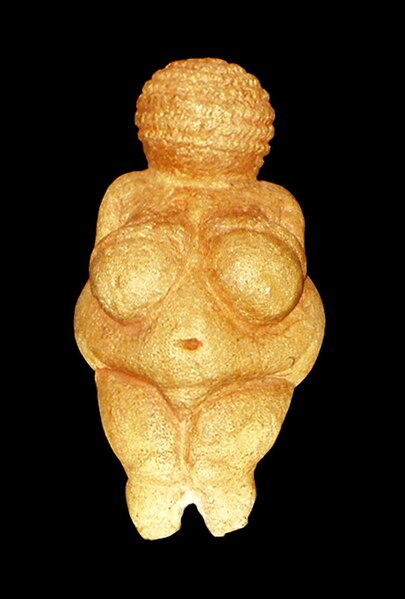
Venus figurines are depictions of females.

Wikipedia


This is a picture of a Paleolithic flute.

Archaeology.about.com

Neolithic Revolution

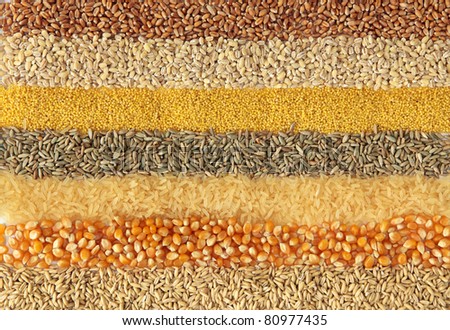
Examples of domesticated plants are: cereals, seedless fruits, rice, squash, and later corn (National Geographic).

Examples of domesticated animals are: cattle, sheep, goats, and pigs (National Geographic)

http://www.aardora.com/animal-health/farm-skin-problems/mange
If you would like to read more about it, go ahead and click on the link below!

The Development of Agriculture

Now, I found this picture entertaining. I hope you like too!

Burner's Blog


The Fertile Crescent

http://thewordcollector2.tumblr.com/post/21260701145/arabic-calendar-months-2

About 12,000 years ago, agriculture triggered the "Neolithic Revolution". There were many factors that contributed to plant domestication and farming animals. "In the Near East, for example, it's thought that climate changes at the end of the last ice age brought seasonal conditions that favored annual plants like wild cereals" (National Geographic). 

Technology!

During the middle paleolithic, Mousterian tools were used. The Mousterian industry consisted of Levallois tools, projectile points. Such tools comprised of points and cores. "Block or cobbles of flint and other brittle fracturing rock were percussion flaked on one side until a convex "tortoise shell" shape was formed. Then, a heavy percussion blow at one end of the core removed a large flake that was convex on one side and relatively flat on the other" (http://anthro.palomar.edu/).

This YouTube video give us a an idea of how these flake tools were made.


The Human Journey

Anatomically modern humans began their movement out of Africa via the Bab-el-Mandeb Strait on the Red Sea. This body of water was narrow, relatively shallow and lies between Africa and Asia, so it offered the shortest route to new continents. Homo sapiens most likely crossed the Red Sea with some kind of raft. If you would like to read more about modern human's migratory crossings, click on the link below.

Migratory Crossings

Here is a picture of the Bab-el-Mandeb Strait:

Wikipedia

Just in case you didn't already know, here is a picture of where the Red Sea lies. 

Boncia.co

Tuesday, April 15, 2014

Early Homo sapiens


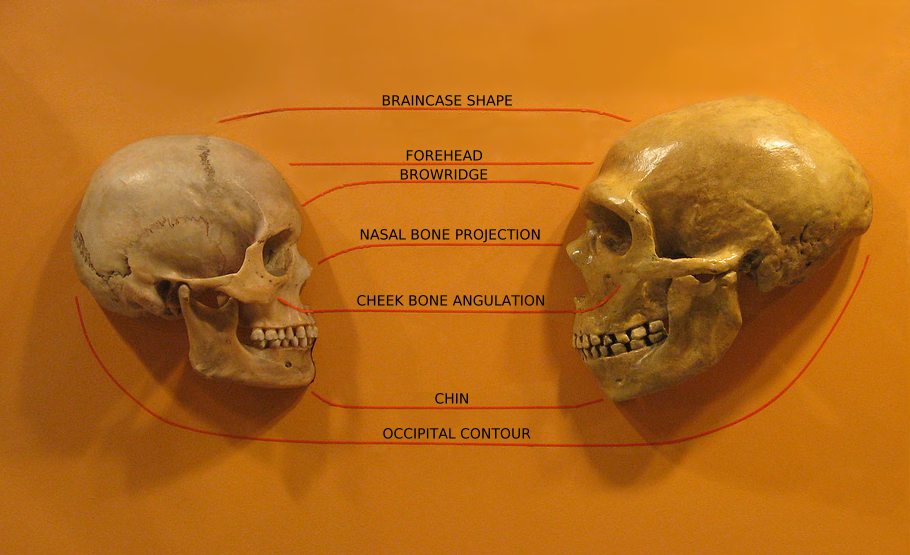
This is a really cool anatomical comparison of the skulls of a modern human (left) and a neanderthal (right) (Wikipedia). 

Using mtDNA to trace our ancestry

Yesterday, I introduced the idea of Mitochondrial Eve and Y-chromosome Adam, but how exactly is the ancestry traced?

Here is a link to an online simulation showing us how only one woman could be our mitochondrial ancestor.

Tracing Ancestry

According the NOVA online, three researchers studied the mtDNA of 147 people from continents all around the world. Then, these researchers used a computer program to help them put together a family tree, "grouping those with the most similar DNA together, then grouping the groups, and then grouping the groups of groups."After analyzing the data, the researches "inferred that the most recent common mtDNA ancestor was an African woman."

The three researcher went as far as trying to estimate the age of the ancestor. In order to get an estimate, they assumed that random mutations occurred at a steady rate. "And since they now had an idea of how much the mtDNA had changed from the ancestor's, all they needed was the mutation rate to determine the age of the ancestor."

There has definitely been an increase in supporting scientific evidence since this article was published in 2002, but isn't this a crazy idea to wrap your head around? Well, if you're interested and want more details, click on the link below!

Tracing Ancestry with mtDNA